
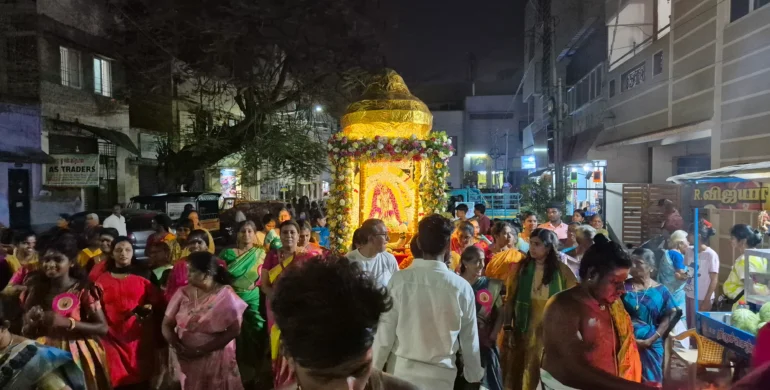
Institutional Context and Strategic Objectives
In the contemporary landscape of civil society organizations, the synthesis of cultural heritage and proactive social welfare remains paramount. The Srishti Amba Foundation’s execution of the Chitra Pournami event on May 2, 2026, serves as an empirical case study of this integration. While rooted in historical lunar calendar celebrations, the event’s primary operational focus was the strategic deployment of localized food security interventions and the promotion of radical social inclusion across fractured demographic lines.
Quantifying the Intervention: Logistical Excellence in Annadanam
To maximize the efficacy of the food distribution drive, the foundation instituted an end-to-end operational framework:
- Sourcing and Nutrition Matrix: Ingredients were sourced from local agricultural collectives to support the regional micro-economy. The meal profile was strategically engineered to provide balanced caloric and macro-nutritional value, consisting of traditional fortified rice varieties, lentil sambar, vegetable poriyal, and clean drinking water.
- Hygienic Protocols: Kitchen operations adhered strictly to ISO-aligned safety parameters, deploying food-grade preparation tools, hairnets, gloves, and sanitized stainless steel distribution units.
- Demographic Targeting: Utilizing pre-event ground surveys, the foundation identified high-vulnerability pockets within the local municipality, explicitly targeting elderly individuals without family support structures, daily wage construction workers, and street children.
The operation successfully achieved a zero-refusal distribution standard throughout the duration of the lunar peak hours, ensuring that human dignity was preserved through orderly, respectful table and line service.
Fostering Social Inclusion and Civic Engagement
Beyond the delivery of physical nutrition, Chitra Pournami 2026 acted as a vehicle for dismantling deep-seated socio-economic barriers. Traditional festivals have historically faced systemic critiques regarding accessibility; however, the Srishti Amba Foundation actively counteracted this by establishing an open-access blueprint. Individuals from all socioeconomic classes sat side-by-side, sharing meals without spatial or hierarchical segregation.
Furthermore, the volunteer cohort reflected an intentional mixture of corporate professionals, academic students, and local community residents working in absolute synergy. This structural configuration accelerates community cohesion and strengthens localized mutual-aid networks, providing a replicable model for other non-profit entities operating in developing regions.